Pages

What is your view on the adoption of the Thunderbolt interface on the production industry?

Q: What is your view on the adoption of the Thunderbolt interface on the production industry? How long will it take to replace FireWire and other interfaces?
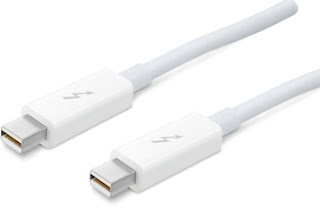
Thunderbolt cables
A: For those of us who require the higher data rates and will really benefit from the higher data rates of the Thunderbolt (like those who are in the production industry), the technology will be adopted very quickly. This first group of early adopters is the driving force that demonstrates a viable market exists.

Up until now, the supply of Thunderbolt products has been somewhat limited. But, as we have many more manufacturers starting to make the Thunderbolt chip and supply becomes more steady, prices will ultimately start coming down.

You'll probably see, int he next year or so, a much larger scale of adoption. I don't know that it will completely replace FireWire, especially if you're working in a slower workflow environment. Ultimately, in the next 2-3 years, you'll probably start to see it disappear in favor of Thunderbolt, as the price comes down and we see wider adoption taking place among those not in our industry.

Is there really a difference between SDHC brands?


Q: There are many brands of SDHC memory cards available. Is there really any difference?

A: Let me tell you about one of my coworkers who writes a hobby blog. She frequently takes pictures and videos of events to use with her updates. She also uses the cheapest SDHC card she can find (and she should know better). She told me, if she lost the content on the cards or the data became corrupted, she’d be upset but not heartbroken. "It's a hobby site," she said shrugging her shoulders. It's a calculated risk and one she's willing to make.

Ask yourself, would you be heartbroken, even devastated if you lost the content on your SDHC card? If you answered “yes,” you should stick with a professional-quality, brand-name SDHC card.

The primary difference among SDHC memory cards is their controllers. The controller is the traffic cop that directs where the data is written on the flash card. A good controller will reduce the likelihood that any one sector will wear out prematurely, so the life of the card is maximized and you come home (or to your office) with your photos or video content in tact.

SanDisk is known as being one of the high-end, professional-grade SDHC cards you’ll want to purchase. They are one of the few manufacturers to make their own controllers. SanDisk is so well respected, in fact, there are certain online auction sites that are rife with counterfeits. So, where you purchase your SDHC cards is important, too. Buy from a trusted reseller: someone with a phone number, someone who’s been around for a while, someone like Polyline.

Assorted Thunderbolt Questions

We've received a lot of questions recently about the thunderbolt Interface. It's an exciting and new technology and there's been a lot of chatter in the production industry about its adaptation. Because most of the questions I've received require short answers, I thought I'd try to tackle them here in one inclusive post.

If you have additional questions, you can send a message here or on our FB page.

Thunderbolt Cables
Q: What options are available if you have data on a Thunderbolt, but the computer you're connecting to isn't Thunderbolt ready?

A: At this time, you can only connect to a computer that is Thunderbolt enabled.

Q: Can we expect to see drives with multiple connections? Like Thunderbolt plus FireWire?

A: At this point, no one makes a chip set that merges both Thunderbolt and other drive interfaces. Adding FireWire would add to the cost of Thunderbolt drives so I don't see this happening in the near future. (Maybe once there's a wider adoption of the technology.) At this time, you need to have a new computer with the Thunderbolt chip set to use Thunderbolt.

5-11-2012 edit: LaCie makes an eSATA-Thunderbolt Hub that allows you to connect eSATA drives to a new Thunderbolt-enabled Mac. It was created for companies that currently use eSATA drives and have upgraded their Macs to versions without ExpressCard/34 slots. It also provides a way for creatives to boost their eSATA drive performance.

Q: Do Thunderbolt drives come with the cable?

A: No. At this time, Apple is the only source for the cable. That may change once more companies start manufacturing the cable. To keep costs low, the drive manufacturers are not including the cable. However, if you buy a Thunderbolt drive from Polyline, we have some drive/cable bundles available.

Q: Is there a limit to how many drives can be daisy chained together and is there any loss of speed with multiple drives attached?

A: There is a limit to 6 devices that can be daisy chained together. There is no loss of speed from daisy chaining. The maximum transfer speed is 800MB/s write and up to 10 GB/s for read.

Q: Can you get thunderbolt cards for a computer that doesn't have it?

A: Not at this time.

Q: Any plans for an SSD model Thunderbolt?

A: I talked to G-Technology and was told, at this time the answer is no. But Western Digital, which recently acquired G-Tech, does have an SSD division. Although there are no official plans, we can totally see this happening in the near future.