Pages

Showing posts with label LTO. Show all posts

What is the difference between the types (generations) of LTO?


Generation


Capacity


Data Transfer Speed


Additional Features

Native


Compressed


LTO-1


100GB


200GB


40
MB/sec


LTO-2


200GB


400GB


80
MB/sec


LTO-3


400GB


800GB


160
MB/sec


Write
Once Read Many (WORM)
cassettes available.


LTO-4


800GB


1.6TB


240
MB/sec


Write
Once Read Many (WORM)
 cassettes available.


LTO-5


1.5TB


3TB


280
MB/sec


1.
Write Once Read Many cassettes available.

2. All tapes include partitioning feature that allows one partition to
hold the index, which tells the drive exactly where a file is located. The
second partition holds the content.


The future generations of
LTO will offer what you probably expected, a higher amount of capacity and
faster data transfer speed. Here’s what you can look forward to in the years
to come:

  • Generation
    6: 8 TB capacity and data transfer speed up to 525 MB/s

  • Generation
    7: 16 TB and data transfer speed up to 788 MB/s

  • Generation 8: 32 TB and data transfer speed up to
    1,1180 MB/s

What is LTO tape?

Click to See All Polyline's LTO Products
It’s magnetic tape used for data storage. LTO stands for Linear Tape Open. It was originally developed in the late 1990s by HP, IBM and Quantum. LTO is widely used with small and large computer systems, usually for backup, but also for archiving.

What is LTO partitioning?

LTO Partitioning and the new Linear Tape File System allow LTO Ultirum 5 to function like a hard drive. (Notice, I didn't say it's as fast as a hard drive, I said it functions as one.)

By partitioning the tape, it allows one partition to hold the index, which tells the drive exactly where a file is located. The second partition holds the content.

What does WORM mean?

Check out LTO Ultrium products at Polyline.
WORM = Write Once, Read Many.
WORM stands for Write Once, Read Many.  It means your data storage can be written to once (not edited or saved "over") but you can read from it multiple times. This is a valuable feature for archiving because you can't accidentally erase something and no one can tamper with the existing files.

Why are two different capacities listed on LTO packages?


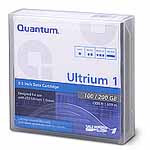
The first capacity listed (the one on the left) is the native capacity. This is how much data the tape holds with no data compression. The second number is for compressed data (assuming 2:1 compression).


Subscribe to Ask Dean

If you like what you've read, enter your email address below to receive the latest Ask Dean posts delivered directly to your mail box. Or, if you prefer, you can follow ASKDEAN on Twitter or via RSS Feed.